X

Pesquisas Internas

  • Ao longo do Semestre de Outono, de salas cheias, os International Studies Programme - ISP Dialogues preencheram a agenda de todos os que quiseram fazer parte deste novo ciclo de conferências. 

    No total, foram dez as conferências que perfizeram os ISP Dialogues, passando por temas do âmbito do Direito Internacional e Europeu e Relações Internacionais. Temas “transdisciplinares, com olhares diferentes”, explica Azeredo Lopes – Coordenador do International Studies Programme, um mestrado lecionado totalmente em inglês.

    “Não se pretendeu (…) que aqui houvesse uma repetição da sala de aula. De forma diferente, sem com ele concorrerem, os ISP Dialogues completam o ensino, muito qualificado, que já propomos aos estudantes, com leituras do mundo diferentes, plurais e tolerantes. Reforçam o pensamento crítico, a capacidade analítica e uma visão global do direito internacional e europeu, num contexto de relações internacionais - em crise permanente”, completou.

    Numa iniciativa que acompanhou a componente letiva do International Studies Programme e abriu as suas portas ao público, o Semestre de Outono contou com uma dezena de convidados:

    • Sónia Sénica, Universidade Autónoma de Lisboa
    • Vladimiro Feliz, CEiiA
    • Francisco Proença Garcia, Instituto de Estudos Políticos (UCP)
    • Marcos Perestrello, Comissão de Defesa Nacional – Parlamento português
    • Ana Santos Pinto, Universidade Nova de Lisboa
    • Sofia Moreira de Sousa, Comissão Europeia
    • João Pedro Matos Fernandes, Universidade do Porto
    • Francisca Guedes de Oliveira, AICEP Portugal Global
    • Paulo Pinto de Albuquerque, Faculdade de Direito (UCP)
    • Isabel Capeloa Gil (UCP)

    "AVALIAR O MUNDO DE HOJE, EM CONTACTO COM O AMANHÃ"

    Este foi o mote do primeiro semestre dos ISP Dialogues, com uma sequência de temas em que se abordou a guerra na Ucrânia, o futuro das cidades, a geopolítica e as ameaças à democracia liberal, os Parlamentos e a Política de Defesa Nacional, o Médio Oriente, a União Europeia como ator global, as alterações climáticas, o capitalismo, a democracia liberal e a pobreza, o Tribunal Europeu dos Direitos Humanos como promotor de responsabilidade e dos direitos humanos e a capacidade de esquecer nas práticas internacionais de reconciliação.

    Para Azeredo Lopes, a participação e adesão dos alunos é um dos pontos a destacar: “A adesão a este modelo conforta em muito aquela ideia de que ou desenvolvemos a capacidade de ouvir outros saberes ou saberemos cada vez menos daquilo que achamos já saber”.

    Em breve, chega o ISP Dialogues - Semestre de Primavera

    O próximo ciclo de conferências aproxima-se e há já detalhes a revelar. “Teremos palestrantes com muita experiência internacional ou em carreiras internacionais. Continuaremos a apostar em saberes diferentes, da economia à psicologia, passando pela diplomacia ou pela cultura. Queremos por outro lado que, até politicamente, estes sejam saberes plurais.”, revela Azeredo Lopes.

    “Quando apostamos em ouvir (só) quem pensa como nós, quem não nos confronte com outras ideias, abordagens ou projetos, empobrecemos e, justamente, matamos o diálogo. Ora, se o International Studies Programme foi concebido por forma a que o debate de ideias acompanhe a lecionação, os ISP Dialogues teriam, naturalmente, de refletir esta ambição.”

    Brevemente, será revelado o programa completo do Semestre de Primavera dos ISP Dialogues.


    ISP Dialogues - Autumn Semester 2022/23
     

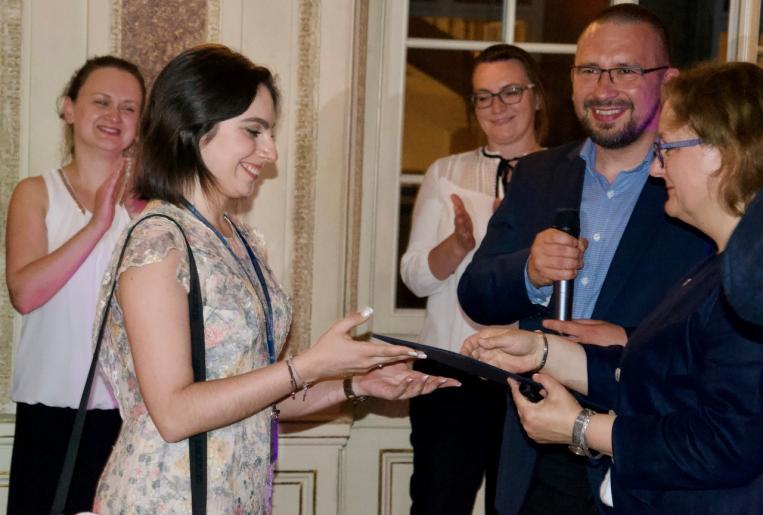
  • At the FLOW ANALYSIS XV international conference, which took place from June 26 to July 1, 2022 in Kraków, Poland, PhD student Francisca Ferreira was distinguished with the prize «Best oral presentation in young scientist session» for the oral presentation of her work in the session of young scientists. This recognition, which consists of books, chocolates and a certificate, rewards the work «On-hand tool for CKD monitoring – design of a couple of μPADs for ammonium and urea determination in saliva» carried out in the group of António Rangel under the guidance of Raquel Mesquita. The summary of this work can be consulted on page 120 of the minutes book.

    Francisca is dedicated to developing paper-based disposable analytical devices for rapid diagnosis of biomarkers in non-invasively collected biological fluids (in saliva and urine). The aim is to explore the concept of paper-based microfluidic devices (µPADs) for real-time and in-situ quantification of chemical/biochemical parameters relevant to health.

  • For Maria João Monteiro, researcher at the CBQF, couples who are participating in the initiative are having the possibility of "trying the foods of the future firsthand and becoming a "trendsetter" in the field of healthy eating in Europe".

    The investigation is taking place since last October (until this month) and includes filling out a brief online survey, the experience of making and consuming new food products at home, the use of a mobile application to record food consumption and, occasionally, participation in product tasting sessions on the campus of Universidade Católica Portuguesa, in Porto, after working hours.

    Read the article here.

  • Agricultural productivity in the Mediterranean region is seriously threatened by climate change, soil degradation and depletion of water resources. This scenario is compounded by inadequate agricultural management practices, including excessive use of chemical fertilizers and pesticides, overgrazing and overproduction in monoculture. It is within the scope of these challenges of intensive agriculture that ReCROP arises, coordinated by the Centre for Biotechnology and Fine Chemistry (CBQF) of Católica in Porto and co-financed by PRIMA - Partnership for Research and Innovation in the Mediterranean Region (Horizon 2020). The project is born from the intersection of agriculture and biotechnology, relying on the institution´s long-term experience in the search for biotechnological solutions based on nature and hidden biodiversity for soil regeneration.

    Addressing technical and economic issues, the project will serve as a demonstration platform reaching out to farmers and a wider audience in order to promote the adoption of more sustainable farming practices that will overcome some of the most serious threats to Mediterranean farming systems.

    Sofia Pereira, researcher and scientific coordinator of the project, states that “ReCROP aims to promote the sustainability and resilience of agricultural production systems in the Mediterranean region through the combined use of biotechnological tools, such as bioinoculants (mycorrhizal fungi and growth-promoting bacteria of plants) and sustainable agronomic practices, which include co-cultivation and crop rotation schemes, application of correctives, as well as the use of adapted and/or tolerant local varieties.

    The project is coordinated by researchers Sofia Pereira and Helena Moreira and Paula Castro, and with the collaboration of Eduardo Cardoso and João Cortez.


    Tackling climate change, improving biodiversity

    ReCROP presents an integrated solution that will enable agricultural systems to address climate change by improving soil biodiversity and fertility and conserving water. It will also contribute to increasing crop yields while providing ecosystem services such as increased carbon sequestration, organic matter and nutrient recycling.

    In this way, it is intended to respond to intensive agriculture that has a great impact on the loss of organic matter and soil biodiversity, while favoring its erosion, compaction and contamination.

    The project covers the Mediterranean Geographic Area - Morocco, Egypt, Tunisia, Italy, France, Portugal and Spain - and incorporates crops of high economic importance such as vine, cereals and aromatic and medicinal plants. Agricultural practices will be tested and monitored in different edaphoclimatic conditions (7 countries) – soils and climate -, including experimental plots in a climatic area with Atlantic influence (North of Portugal and Northwest of Spain) and others in drier and hotter regions in the North of Africa.


  • We are what we eat, but we are even more. The impact of food on our daily lives goes far beyond the needs of our body. Probably, we all have thought at some point about the importance of food in our lives, but are we all aware of how food affects us, impacts us, transforms us, inspires us, entertains us? Well, the list of opportunities in Food is immense and it is on the multidisciplinary campus of Católica in Porto that the transversality of this theme becomes evident. Research, physical and mental health, gastrodiplomacy, orthorexia nervosa and interaction and art have Food as a common denominator. There is no doubt that, whether in Science, Law, Economics and Management, Psychology and Education, Arts or Nursing, Food occupies a very important place.

    This commemorative day was celebrated on October 16, the date of creation of FAO – Food and Agriculture Organization of the United Nations. This body has worked to combat poverty and hunger by promoting agricultural development and improving nutrition. This commemoration is an opportunity to reflect on what can be done to eliminate poverty and hunger in the world and on the impact that food has on everyone's lives.

    What can I eat anyway?

    Food is crucial in our life, because it guarantees our survival. But not only. It is also one of the greatest pleasures for many people and is also a form of cultural identity and even an expression of economic status.

    But, let's go straight to the question everyone wants an answer to: after all, what can or should I eat? Can I eat this? Is that? And in what quantity? Elisabete Pinto, researcher at the CBQF, explains that the answer is always “it depends”, because it depends on who eats it, when they eat it, how much they eat it, how it was produced, how it was prepared, among others. factors. When the theme is Food, linearity cannot be invoked, because each case is different and because all foods are subject to different combinations, types of production and processing. But one thing is certain: “despite this complexity, it is undeniable that food greatly influences our health, as well as the health of our planet”.

    Elisabete Pinto says that, CBQF “established a strong investigation in the area, with great proximity to the food industry, carrying out a very applied investigation.”

    Driven by dynamism and the desire to always be at the forefront of knowledge, CBQF, over its 30 years of existence, invested in research with a true “farm to plate” approach: “the quality of soils for food production, the study of different varieties of plants to select the most productive and nutritious ones, the development of new foods, the valorization of by-products, the reformulation of existing foods , the optimization of food production processes, food safety, the study of the relationship between food/nutrients and health and the communication of these results in terms of Public Health, the study of the sustainability of the entire value chain, among others.”

  • The mise en place is ready and the apron is on: it's time to get to work at the KitchenLab, at the Centre for Biotechnology and Fine Chemistry (CBQF). It is within the scope of World Food Day, celebrated on October 16th, that ESB took the initiative to make and share the recipe for Carob and Chickpea Cake, which is a source of protein and fiber and has a low content of fat and salt.

    It is in this experimental kitchen laboratory that you will find everything necessary for the design, handling and preparation of food. It is a large laboratory space for learning and experimenting with new and traditional culinary techniques, exploring the potential of ingredients and researching and developing new food products. A true kitchen powered by scientific knowledge.

    The recipe, created by Ana Pimenta Martins, Phd student in Biotechnology, is also free of lactose and gluten and is affordable. Of the different ingredients that make up the recipe, there are three that stand out for their properties.

    These are chickpeas, carob and pomegranates.
    It is with the help of Ana Pimenta Martins that we discover the potential of chickpeas, carob and pomegranate. In general, they all stand out “as foods with a high nutritional value”, which “provide benefits to the health of consumers.”

    Chickpeas, which are part of legumes, should be part of your daily diet. The Food Wheel recommends the daily intake of 1 to 2 servings of legumes [1 portion = 25g of dried legumes (1 tablespoon) or 80g of cooked legumes (3 tablespoons)]. Chickpea is a food that deserves our attention due to its remarkable nutritional value. It has a high vegetable protein content, provides dietary fiber and slowly absorbed carbohydrates, contributing to its regular consumption to control appetite. It is rich in micronutrients and other compounds that protect and regulate the body, namely B vitamins, iron, magnesium, potassium and carotenoids. Like other legumes, growing and producing chickpeas is environmentally friendly.

    Carob is the fruit from the carob tree, a plant that is part of the legume family. Carob flour is derived from the pulp of the fruit which has undergone a roasting and grinding process. This flour has a sweet taste that resembles cocoa/chocolate, and is therefore used in its place in the confection of sweets. It is naturally low in fat, is a source of vitamins and minerals, is rich in flavonoids, antioxidants that have an anti-inflammatory, anticancer and antidiabetic function, and in fiber, contributing to appetite control, regulation of intestinal transit, control of plasma levels of cholesterol and blood glucose. It is also gluten-free and has anti-diarrheal properties. Unlike cocoa, it does not contain stimulating compounds such as caffeine and theobromine.

    The pomegranate is a fruit characteristic of autumn and, therefore, it is of the season. It is a very interesting fruit from a nutritional point of view, with a high concentration of substances with antioxidant properties. These compounds are important in protecting the body's cells, contributing, for example, to promoting cardiovascular health. In addition, it is a source of fiber, vitamin C, potassium and iron.

    The KitchenLab
    In this experimental kitchen laboratory you will find everything necessary for the design, manipulation and preparation of food, framed in a research center equipped with the most advanced scientific resources in the areas of chemistry, biology, physics and sensory analysis.

    KitchenLab, a place of for learning and experimentation, offers crucial support to several lines of research at CBQF. It is intended that KitchenLab be considered an essential resource for professionals of all branches and dimensions in the most varied food frontiers.

    Let's not wait any longer. Here's the recipe
    A recipe that inspires healthy, delicious, economical and sustainable cuisine.

    Necessary material
    Food processor, oven and cake pan

    Ingredients

    • 400g cooked chickpeas
    • 80g carob flour
    • 120g brown sugar
    • 6 eggs
    • 2 tablespoons of port wine
    • 1 teaspoon yeast
    • Topping (optional): 50g of 70% cocoa chocolate and pomegranate

    Preparation Method

    • Preheat the oven to 180ºC.
    • Grease shape.
    • With the aid of the food processor, reduce the cooked chickpeas to puree and gradually add the whole eggs, the brown sugar, the carob flour, the two tablespoons of port wine and the yeast, grinding everything very well.
    • Pour the dough into the mold and bake for about 30-35 minutes. Use a toothpick to confirm cooking: if it comes out dry or with just a few dry crumbs attached, it's ready. Unmold carefully and let cool.
    • For the topping, melt the chocolate in a bain-marie, cover the cake and decorate with pomegranate.

    Nutrition declaration per 100g of cake

      Per 100g
    Energy (Kj/Kcal) 872 / 207
    Lipids (g) 6
    Saturated (g) 2
    Carbohydrates (g) 28
    Sugars (g) 18
    Fiber (g) 3
    Proteins (g) 8
    Salt (g) 0,14


  • INSURE – Innovation in Sustainability and Regeneration Hub turns one year old! A joint initiative of the Universidade Católica Portuguesa in Porto – through ESB and CBQF and the Católica Porto Business School -, with Planetiers New Generation, to which more than 40 national and international entities, from the most diverse sectors, have already joined. The most recent organizations to join this range are ANJE – Association of Young Entrepreneurs and Fundación Ashoka Emprendedores Sociales.

    João Pinto, vice-president of the Universidade Católica Portuguesa in Porto and professor at the Católica Porto Business School, makes a very positive assessment: “it was a challenging year that made us more and more certain that we are treading a demanding path, but with a lot of sense. We realized this in contact with our national and international partners and in strengthening the partnership we have between Católica and Planetiers.” João Pinto also mentions “we complement each other and we realize that we have an important role to play in bringing Portugal to the forefront of the desired transformations at European level.”

    We spoke with João Pinto, Manuela Pintado (director of the Centre for Biotechnology and Fine Chemistry) and António Vasconcelos (co-leader of Planetiers New Generation) about the main milestones and challenges that lie ahead when leading an initiative such as the INSURE.hub, which is developing a set of activities aimed at achieving the UN Sustainable Development Goals, the European Green Pact Strategy and the goals set for Europe 2030, helping to bring Portugal to the forefront of countries progressive within the EU.

    On the 17th of November, the 2nd Conference of INSURE.hub took place at the Universidade Católica Portuguesa in Porto.


    What were the main challenges you encountered in this first year?

    In this first year of activity, one of the main challenges was to find an area of ​​convergence between the needs felt by companies in Sustainability and Innovation vs. approaches based on holistic thinking that result from the work we have been developing with international thought leaders. We had an active and very rich dialogue with the leaders of the companies, which reinforced the need to have business strategies in which the business operates within social and environmental limits; and the importance of having training for company staff with a systemic and multidisciplinary perspective, something we consider essential. As a result, we designed a Postgraduate Course in Innovation for Sustainable & Regenerative Business, scheduled for February 2023. Another challenge relates to the difficulties in financing sustainable and regenerative entrepreneurship.

    The financial system still views cutting-edge scientific knowledge with some reservation, which it sees as “closed” in university laboratories and research and technology centres. Investors with more suitable characteristics for 'ventures' are still scarce in Portugal, despite all the evolution of entrepreneurship in recent years and the growing access to investors in international markets.


    What are the big achievements?

    We felt, firstly, an important reception for a dynamic to strengthen the approach of the business and associative sector to the academy, having as a backdrop the cooperation and the creation of mutual learning networks. There are more than 40 entities that joined the INSURE Hub throughout the year, having felt the importance of going beyond signing an agreement, and taking advantage of what the Universidade Católica Portuguesa (through Católica Porto Business School and ESB and CBQF) and Planetiers New Generation, have to give - not only from the point of view of skills and technical approaches, but also in supporting the establishment of an integrated vision of the business.

    Additionally, we realize that our partners are fully aligned with the need for new approaches that help them navigate through enormous uncertainty and complexity, and within environmental constraints, moving from the take-make-waste philosophy to new environmental, social, and social paradigms. and economical.


    Is the launch of a new executive course in the area of ​​Sustainability and Regeneration intended to respond to a market need? What are the big differentiating factors?

    The new executive course aims to prepare professionals with the knowledge and skills necessary to transform current management models and evolve towards a clean and circular economy, in accordance with the objectives of the European Green Deal. It is important that such knowledge be transdisciplinary and holistic, understanding the system in which each business operates and including its entire value chain. This is, from the outset, a major differentiating factor compared to other types of offers, which is made possible by the mobilization of relevant national and international partners, who have been developing work of great impact in their areas. More than a traditional management course, we thus integrate, in a coherent and synergistic way, the knowledge of the Faculties of the Universidade Católica Portuguesa with the vast experience of international partners in the areas of innovation and sustainability, crossing sciences and management.


    What are the big short and medium term priorities for INSURE.hub?

    Next year we want to increase the relationship with existing partners, substantially expand the network of partners (by doing so, we will expand the learning of new challenges to be faced), and we want to work more diligently on the theme of literacy and the articulation between the business sector and the new generations. We know that Católica has great flexibility and multidisciplinarity, which we want to put fully at the service of INSURE.Hub. We are, in fact, in a new era of the economy of societies, which integrate economic and business development with the development of people and the education of the new generations. And this is the path that the INSURE Hub will increasingly develop.

  • Universidade Católica Portuguesa was recognized, for the 4th consecutive year, as the best Portuguese university by Times Higher Education, in THE World University Rankings 2023.

    In the most recent edition of the well-known annual ranking, released this Wednesday, UCP maintains the national leadership position, among 14 Portuguese higher education institutions, placing itself in the first quartile of the ranking (position 351-400) worldwide.

    The ranking reveals a significant rise of the UCP, compared to the previous edition, in two of the five dimensions evaluated: Teaching and Research.

    According to the Rector of UCP, Isabel Capeloa Gil, “the recognition of this prestigious international ranking reveals, above all, the consistency and relevance of the work produced by the academic community of the UCP, which has, over the years, reinforced the specialization of its research, one of the most important indicators of this ranking.”

    THE World University Rankings evaluates the institutions that competed on the basis of 13 indicators, divided into axes that range from the quality of teaching to the reputation of research, passing through citations in specialized journals and internationalization.

    In the dimension of Citations, Universidade Católica Portuguesa is evaluated with distinction, ranking 47th worldwide. An indicator that seeks to analyze the quality of research produced by universities.

    The work of UCP researchers has contributed to this result, internationally recognized through various rankings, such as the “World's Top 2% Scientists 2021”, prepared by Stanford University (USA), which places eight UCP scientists in the Top world's most cited researchers in 2020 and 2021.

    The Times Higher Education World University Rankings 2023 includes 1,799 higher education institutions worldwide, such as Harvard University, Oxford University and Imperial College London.

    It is one of the most important and consulted generalist rankings used for ranking universities.

    More information on the Times Higher Education World University Rankings here.

  • Anabela Veiga, PhD student and member of the Biomaterials and Biomedical technology lab at CBQF, was awarded with a Fulbright grant, which will allow her to develop part of her research in the United States of America, from February to August 2023. It will be on the other side of the Atlantic that she will continue to develop her work on the field of tissue regeneration and from her she wished to bring several competencies and knowledge that can also contribute to the growth of her research team at CBQF: “Here, we fight to do better and continuously learn”.


    Q: What does being awarded with a Fulbright grant means to you?

    Anabela Veiga (AV): It is an opportunity that will allow me to integrate a prestigious and global community that stands for the same principles I do: gender equality, cooperation and solidarity, development of innovative projects meaningful for the community. Besides that, I will develop my work using state of the art technologies (co-culture of 3D materials based in silk natural protein, using bioreactors, aiming at obtaining a totally functional structure – vascular and neuronal nets) and I will be monitored by field experts, which will highly enrich my project and my knowhow.


    Q: What do you expect from this experience in the United States?

    AV: I hope to acquire a lot of knowledge in cell culture, co-culture and the use of bioreactors, as well as quality assurance measures, management and work organization. I wish to bring back these competencies and knowhow to CBQF so that all the research team can benefit from them. I will do as my other colleagues when they have the opportunity to integrate another team and research laboratory. We all fight to do better and continuously learn.


    Q: What is the greatest challenge you see ahead?

    AV: Probably the cultural integration. In Europe, we find people with a certain culture, lifestyle and behavior similar to those found here in Portugal. During the period I was in Madrid, where I had the opportunity to work for more than half a year with an ESB Erasmus+ grant, I think I had the best possible experience, since the whole team was willing to help me, brainstorm and contribute to my work. I am aware that in the USA, people may be more focused on their own tasks and, eventually, will set deadlines that might add more pressure and stress. In any case, it is only a matter of adaptation and resilience.


    Q: What is the focus of your research project?

    AV: My PhD in Biotechnology is being developed under the supervision of Ana Leite Oliveira and the theme is “Biofabrication of an innovative silk-based 3D construct as a new strategy for engineering skin tissue”. My project has the collaboration of the Laboratory for Process Engineering, Environment, Biotechnology and Energy, from the Faculty of Engineering, University of Porto, from Instituto de Ciencia y Tecnología de Polímeros, in Madrid, and the Trufs University, more specifically, the Department of Biomedical Engineering from the Tissue Engineering Resource Center – TERC, in the USA, to where I am going in the beginning of the next year with the support of the Fulbright grant.


    Q: Why did you choose to study here?

    AV: I wanted to work in the field of biomaterials and the Centre of Biotechnology and Fine Chemistry (CBQF) has a multidisciplinary team, whose focus is to develop sustainable materials with high value for the industry. Besides that, the Biobased and Biomedical Products group has the knowhow in silk proteins, in developing and optimization of materials for skin regeneration and a fully equipped cell culture laboratory. I have always keep in touch with Ana Leite Oliveira, who has always supported me, believed in my potential and gave me the freedom and assistance to be creative and innovative in my work.


    Q: What motivates you?

    AV: I see myself as someone naturally motivated to work and learn. I like to challenge myself, as it is a way to grow, both professionally and personally. I am able to adapt myself to different work environments, with different people, and I enjoy the team work as well as helping my colleagues.

  • Opinion article by Marta Correia, researcher at the CBQF.

    Animal products are an important source of high-quality proteins and nutrients, but their impact on the planet's resources is undeniable.

    Food and agriculture are currently key issues on international agendas. On the one hand, due to the growing impact of climate change on production flows, on the other, due to the recognized worsening of the food crisis resulting from the pandemic and the consequences of the conflict in Ukraine. In fact, the interruptions felt in the food chain and availability have, until now, been enough to affect markets and families all over the world, increasing the number of people in a situation of food insecurity. At the same time, climate change increases the risk of unproductive harvests, catastrophic events and large-scale migration, further exacerbating food prices.

    Read the article in full here.

Pages